
NEXBODY JOURNAL
How to Choose a Body Composition Analyzer for Your Gym
Learn how to choose a body composition analyzer for your gym.
Choosing a body composition analyzer for your gym requires evaluating measurement accuracy, assessment capabilities, testing efficiency, reporting features, total cost of ownership, and manufacturer support. This guide compares assessment technologies and explains how to select the right equipment for your fitness facility.
However, with different measurement technologies, assessment capabilities, and price ranges available, choosing the right equipment can be challenging.
This guide explains how to select a professional body composition analyzer that meets your gym's operational needs, supports personalized training, and creates long-term business value.
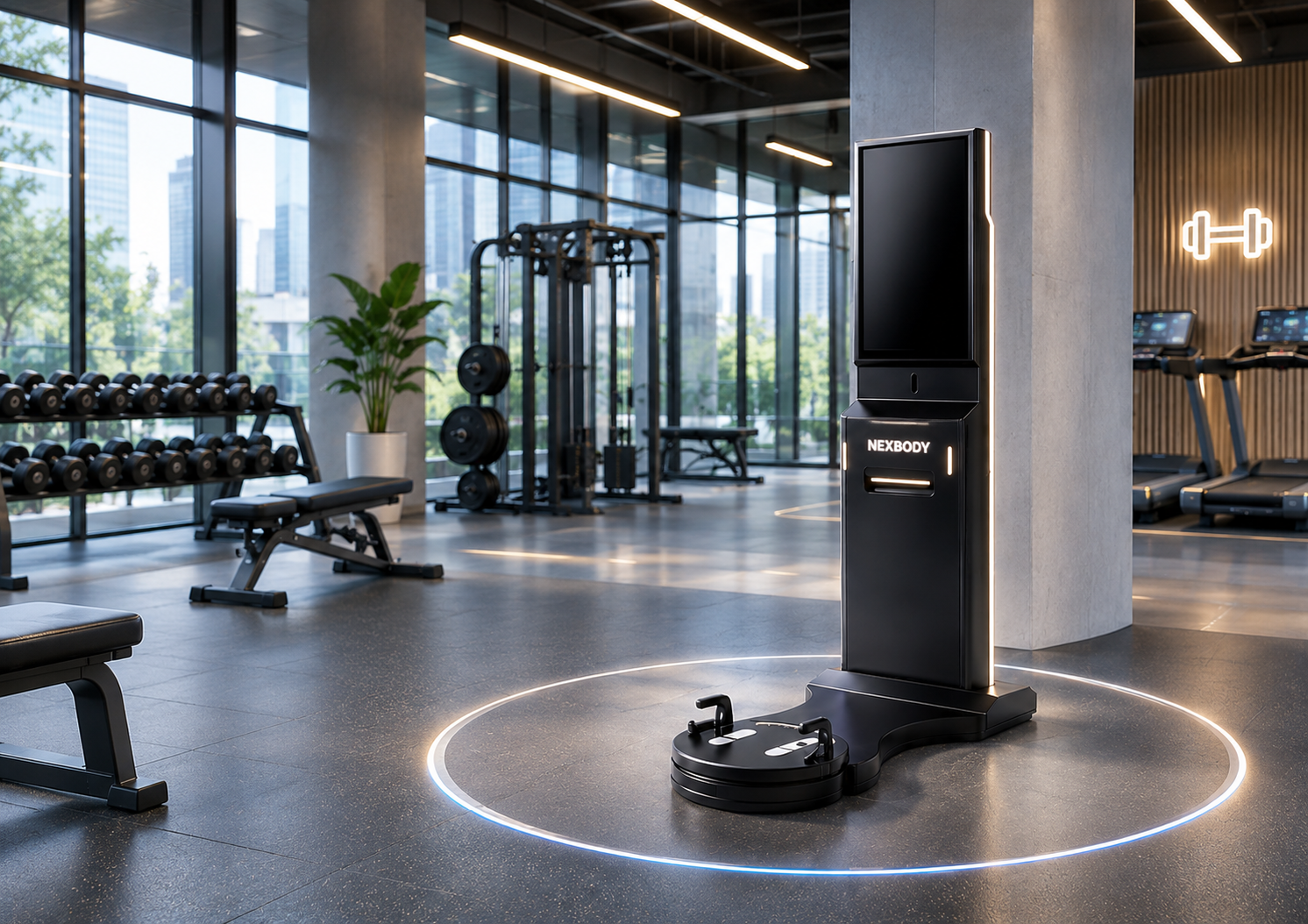
What Should You Look for in a Body Composition Analyzer for Your Gym?
A professional body composition analyzer for gyms should provide reliable and repeatable measurements, comprehensive assessment parameters, efficient testing, clear reports, and a user-friendly operating experience.
The right equipment should also match your facility's member volume, training services, available space, and budget.
When choosing a body composition analyzer, gym owners should consider seven essential factors:
- Measurement technology
- Accuracy and repeatability
- Assessment capabilities
- Testing speed and ease of use
- Reporting and software features
- Total cost of ownership
- Manufacturer support and after-sales service
For gyms offering personalized training, functional fitness, or comprehensive wellness services, a multifunctional body assessment system that integrates body composition, posture assessment, and mobility evaluation may provide additional value.
1. Understand the Different Body Composition Measurement Technologies
Not all body composition analyzers use the same measurement technology. Each method has different advantages, limitations, and operational requirements.
Understanding these differences can help gym owners select equipment that fits their daily assessment needs.
Bioelectrical Impedance Analysis (BIA)
Bioelectrical impedance analysis (BIA) estimates body composition by measuring the body's opposition to a small electrical current.
Professional BIA devices can provide estimates of body fat, skeletal muscle mass, total body water, and other body composition parameters.
BIA is widely used in fitness facilities because it is non-invasive, relatively fast, and practical for routine assessments. However, hydration, food intake, recent exercise, and testing conditions can influence measurement results.
Dual-Energy X-Ray Absorptiometry (DEXA)
DEXA uses low-dose X-rays to estimate fat mass, lean tissue mass, and bone mineral content.
Although commonly used in clinical and research environments, its equipment costs and specialized operational requirements make it less practical for routine commercial gym assessments.
3D Optical Body Scanning
3D optical body scanning captures external body shape and dimensions using cameras or optical sensors.
It can provide body circumference measurements, body shape information, and, in some systems, model-based body composition estimates.
Its measurement principles differ from those of BIA, and its performance depends on the sensors and algorithms used.
Comparison of Body Composition Measurement Technologies
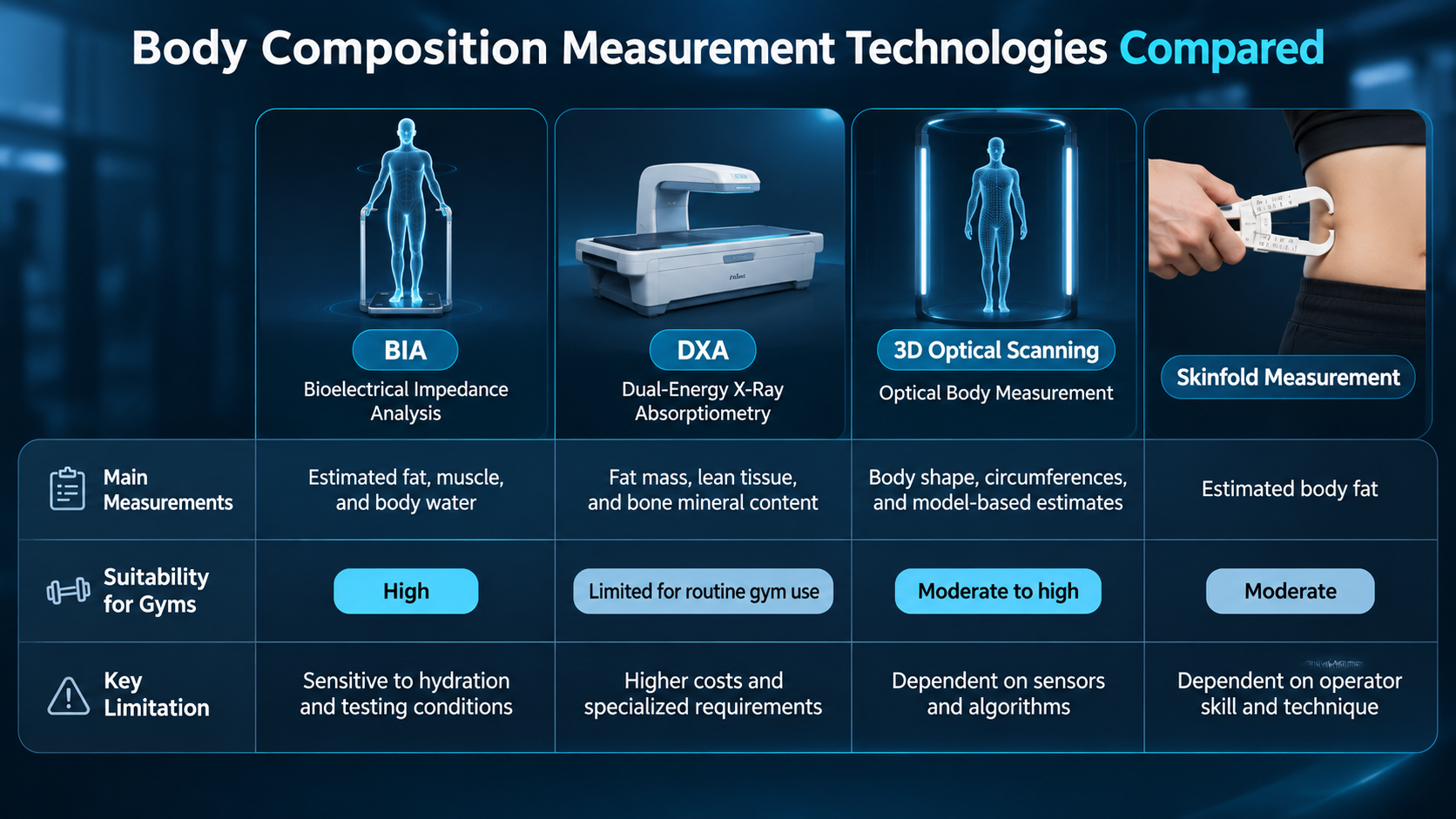
For most commercial gyms and personal training studios, professional BIA-based equipment offers a practical balance between assessment capabilities, testing efficiency, and operational costs.
Learn more about body composition and how is it measured
2. Prioritize Measurement Accuracy and Repeatability
Accuracy and repeatability are two essential factors when evaluating professional body composition equipment.
Accuracy describes how closely a measurement agrees with an appropriate reference method, while repeatability describes how consistently a device produces similar results under the same conditions.
Both are important for fitness professionals who use assessment data to support individualized training decisions.
Before purchasing a body composition analyzer, ask the manufacturer:
- Has the equipment been evaluated against a recognized reference method?
- Are validation studies or technical testing reports available?
- What factors can influence measurement results?
- Does the manufacturer provide standardized testing procedures?
- What measurement limitations should operators understand?
Gym operators should also establish consistent testing protocols, including similar hydration conditions, comparable testing times, and avoiding measurements immediately after strenuous exercise.
A large number of measurement parameters does not automatically indicate better accuracy. Reliable equipment should be supported by transparent technical information and appropriate measurement procedures.
3. Choose the Right Assessment Parameters
A professional body composition analyzer should provide meaningful information that helps fitness professionals understand a member's physical condition beyond body weight or BMI.
Depending on the device, important assessment parameters may include:
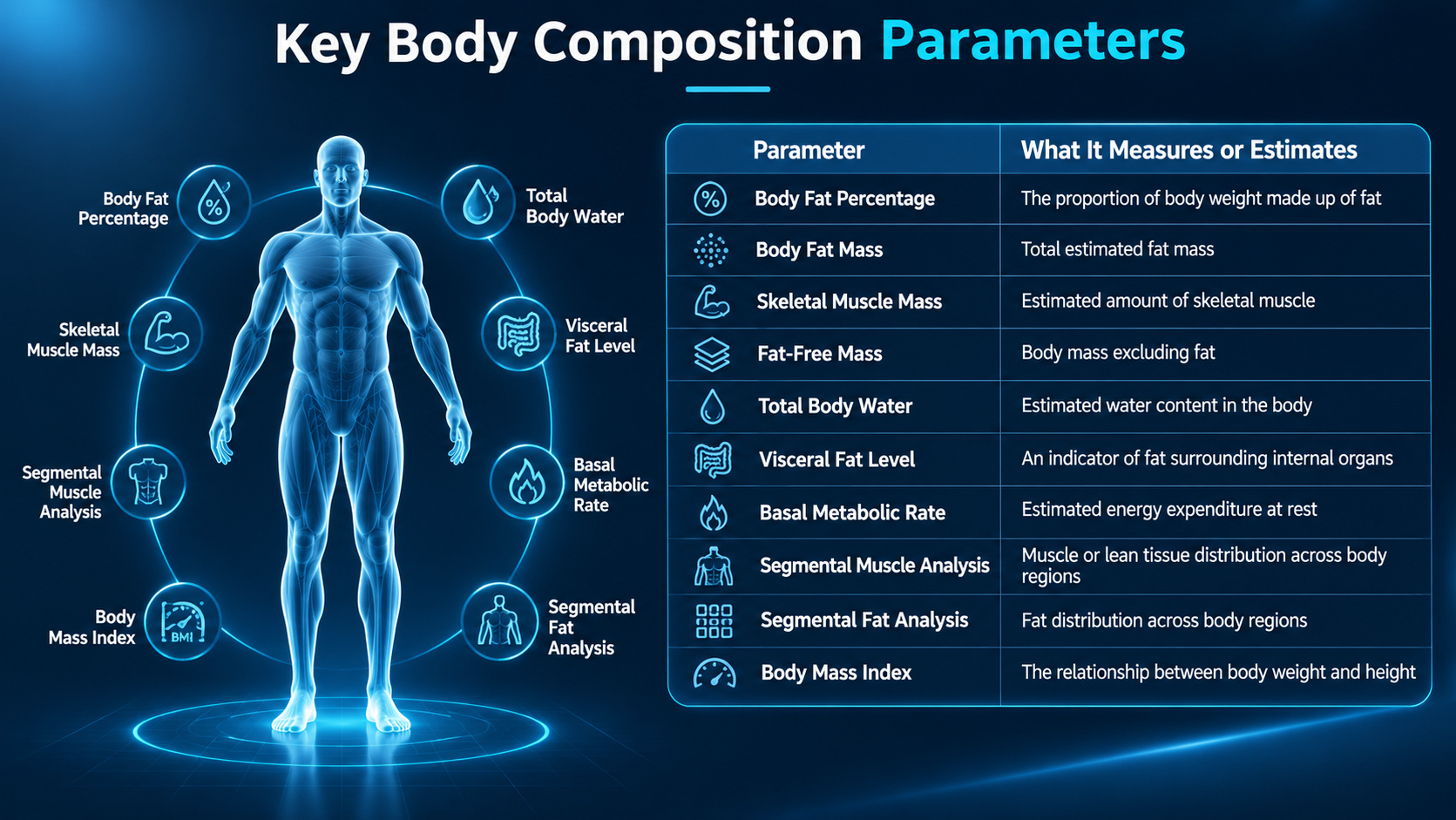
Two individuals with the same body weight and BMI may have different muscle mass, fat distribution, and body fat percentages.
By providing more detailed assessment information, professional body composition equipment can help trainers establish more individualized fitness objectives.
However, gym owners should prioritize parameters that are relevant to their services rather than simply choosing the device with the highest number of measurements.
Explore the key differences between body composition and BMI
4. Consider Whether Your Gym Needs More Than Body Composition Analysis
Body composition analysis provides valuable information about fat, muscle, and body water. However, it does not fully describe a person's physical condition.
A gym member may have a healthy body fat percentage while also presenting postural asymmetries or limited movement ranges.
For facilities offering personalized training, functional fitness, or corrective exercise programs, additional assessment capabilities may help trainers develop a more comprehensive understanding of their members.
Body Composition Analysis
Body composition analysis helps fitness professionals understand muscle and fat distribution, body water, and estimated metabolic characteristics.
These measurements can support weight management consultations, strength training programs, and individualized fitness planning.
Posture Assessment
Posture assessment evaluates aspects of body alignment, symmetry, and observable postural deviations.
It can provide information about shoulder alignment, head position, pelvic alignment, and other postural characteristics.
These findings can support exercise planning but should not be interpreted as medical diagnoses.
Neck and Shoulder Mobility Evaluation
Mobility evaluation assesses selected movement ranges and functional characteristics.
Neck lateral flexion and arm raise assessments, for example, can provide additional information about upper-body mobility before developing exercise programs.
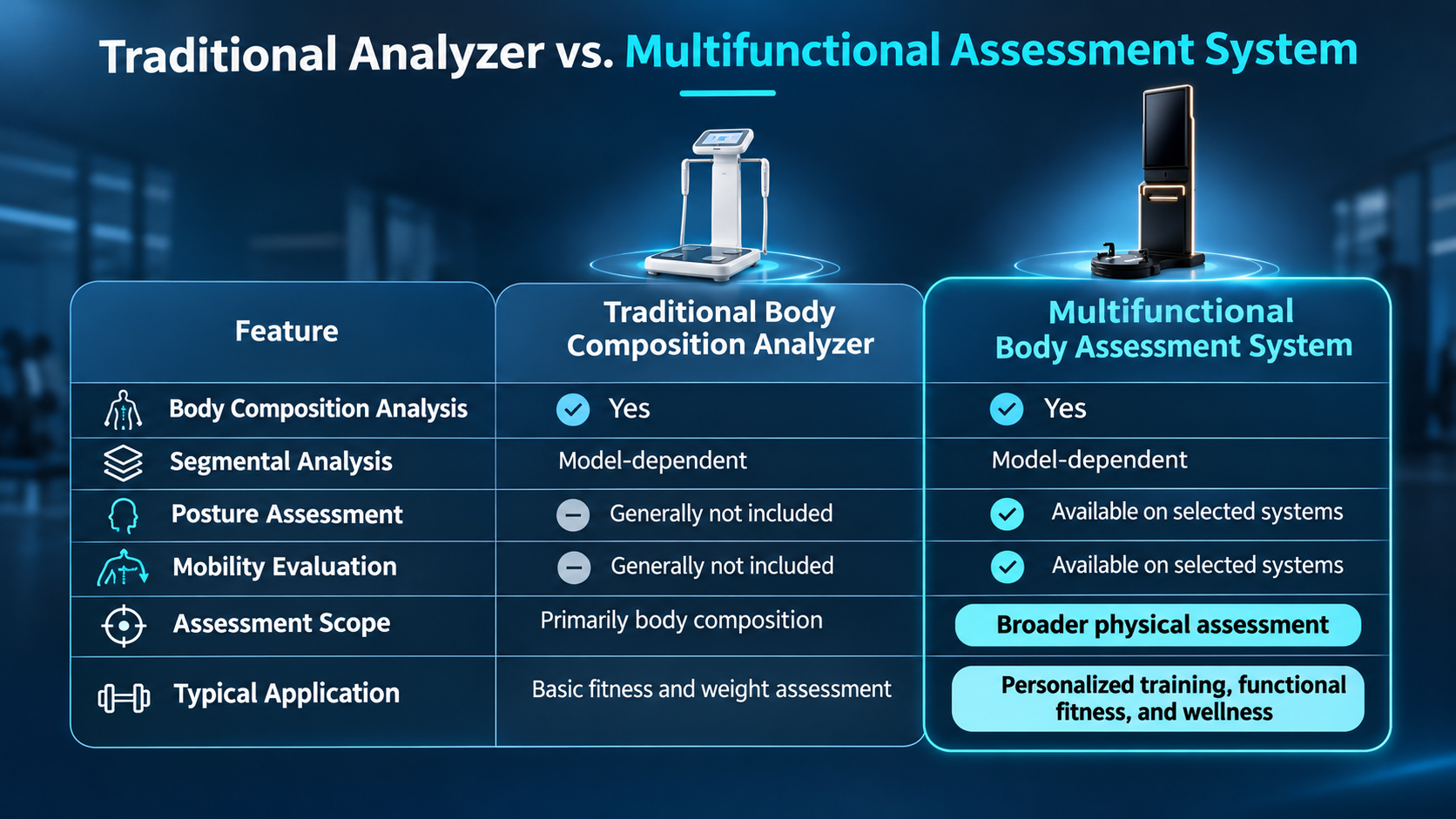
Traditional Body Composition Analyzer vs. Multifunctional Body Assessment System
A traditional body composition analyzer may be sufficient for gyms focused primarily on basic fitness and weight management.
A multifunctional body assessment system may be more suitable for facilities that want to provide comprehensive assessment services and differentiate their personal training offerings.
5. Evaluate Testing Speed and Ease of Use
Testing efficiency directly affects how easily assessment equipment can be integrated into daily gym operations.
A complicated or time-consuming assessment process may reduce staff efficiency and discourage regular use.
When evaluating equipment, consider:
- How long does each assessment take?
- Does the device provide on-screen or voice guidance?
- How much staff assistance is required?
- Are assessment results generated automatically?
- How quickly can reports be shared with members?
- How much installation and operating space is required?
For high-traffic commercial gyms, an efficient assessment process can help reduce waiting times.
For personal training studios, streamlined testing allows trainers to spend more time discussing results and developing individualized exercise programs.
Testing duration should always be evaluated together with assessment scope, preparation requirements, and report generation time.
6. Review Assessment Reports and Software Features
Collecting assessment data is only the first step. The ability to communicate results clearly is equally important.
A professional body composition analyzer should provide structured, easy-to-understand reports that help fitness professionals explain assessment findings to members.
Useful reporting and software features include:
- Clearly presented assessment parameters
- Reference ranges and visual indicators
- Segmental muscle and fat analysis
- Digital report sharing
- Printable assessment reports
- Customizable report branding
- Software integration and API options
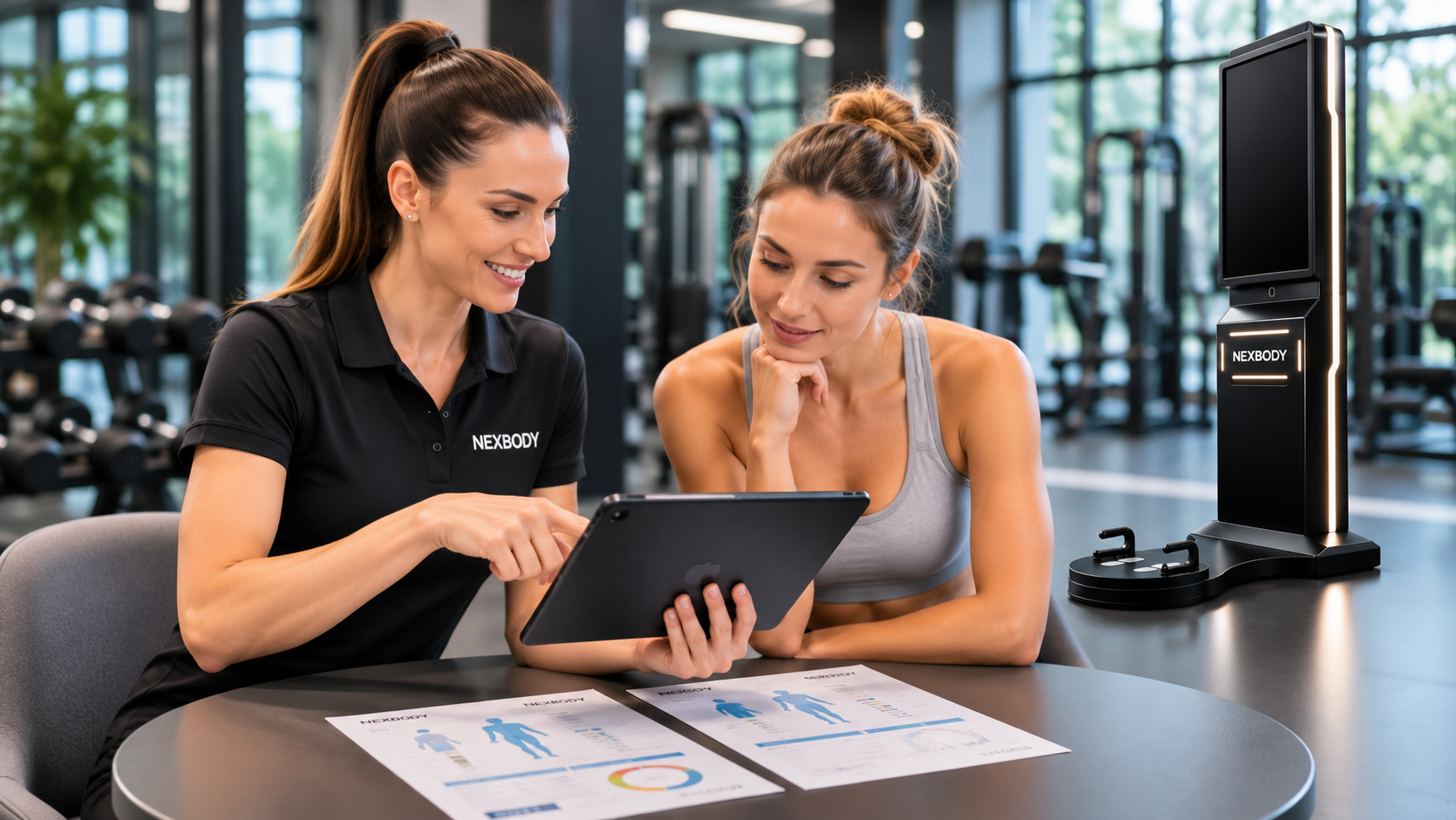
For gym chains and larger fitness organizations, consistent reporting and software integration across multiple locations may also be important.
Gym operators should consider how member data is stored, accessed, and shared, particularly when using cloud-based software or operating in markets with strict data protection requirements.
Before purchasing equipment, request sample reports and a live product demonstration to evaluate the actual assessment experience.
7. Compare Total Cost of Ownership and Manufacturer Support
The initial purchase price of a body composition analyzer is only one part of the investment.
Gym owners should evaluate the total cost of ownership, including ongoing operating expenses and long-term manufacturer support.
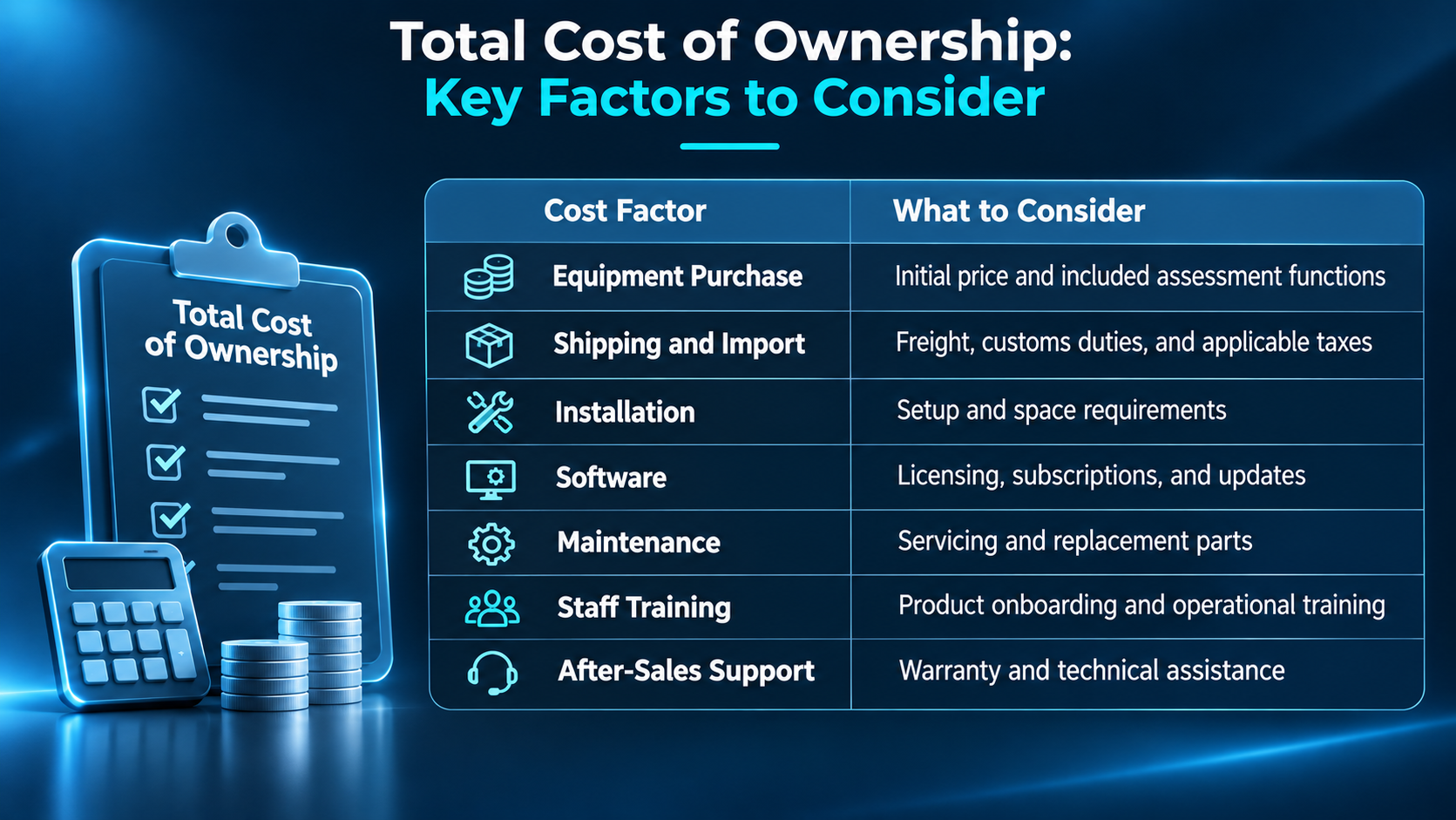
For international equipment purchases, it is also important to confirm applicable product certifications, supported languages, spare parts availability, and local service arrangements.
The most expensive device is not necessarily the most suitable. The right investment should align with your gym's business model, assessment services, and long-term operational requirements.
Which Body Composition Analyzer Is Right for Your Type of Gym?
Different fitness facilities have different assessment needs.
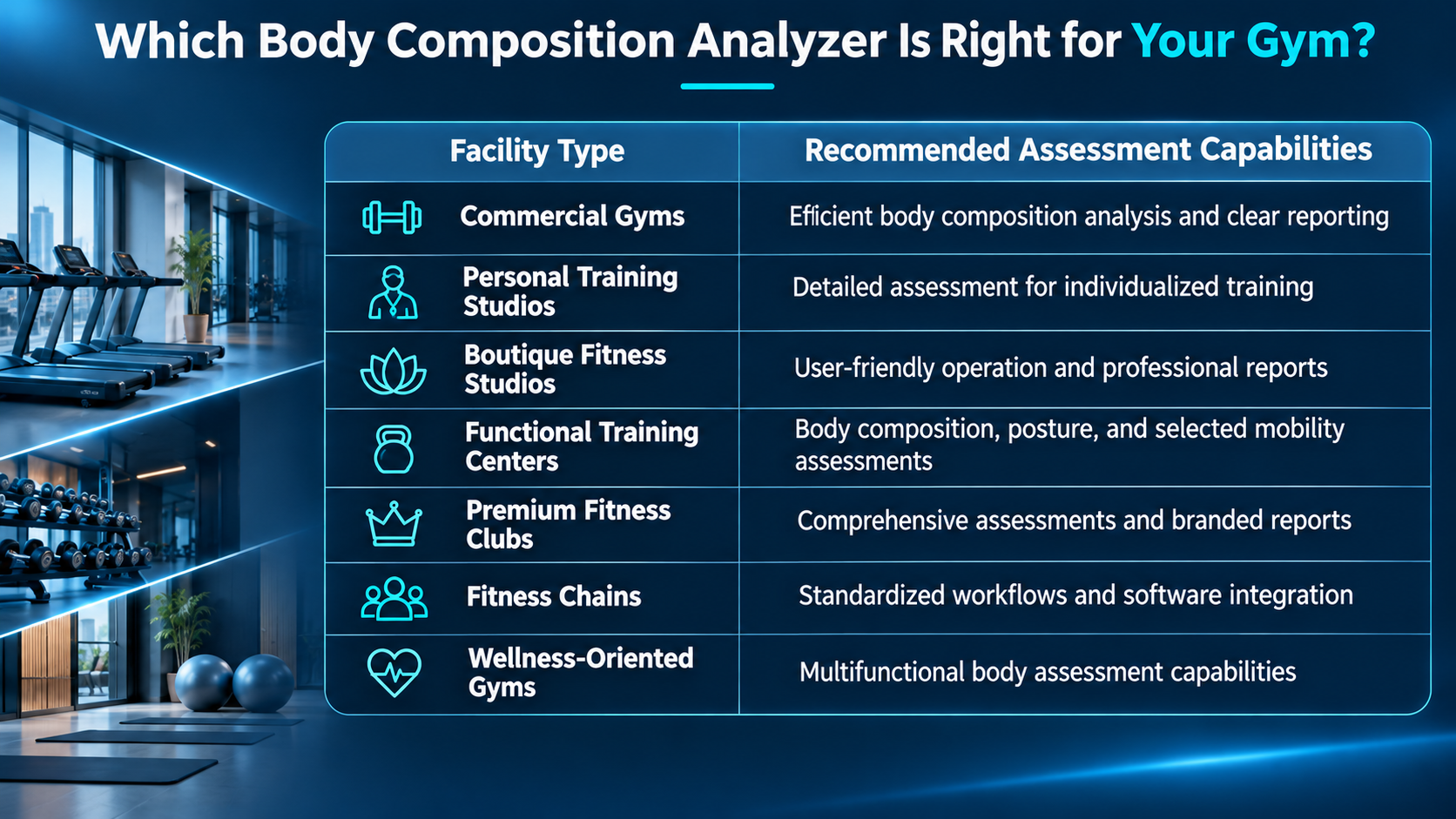
A professional body composition analyzer can support new member consultations, personal training services, premium fitness packages, and wellness programs.
However, its business value ultimately depends on how effectively assessment services are integrated into the gym's daily operations and member experience.
There is no single body composition analyzer that is ideal for every fitness facility. The best choice is the system that matches your members' needs and the services your business provides.
NEXBODY X60: A Comprehensive Body Assessment System for Gyms
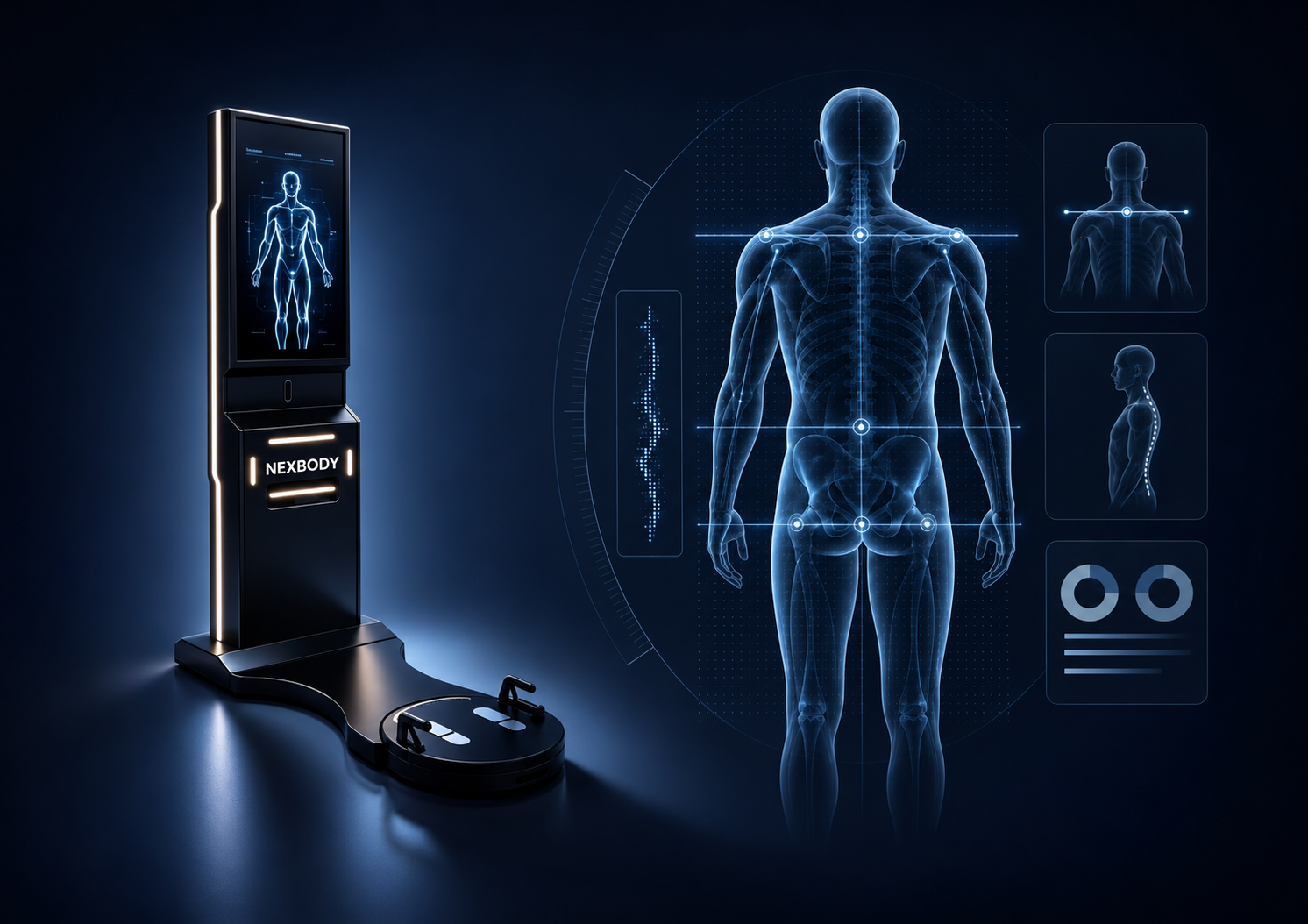
The NEXBODY X60 is a professional body assessment system that combines body composition analysis, posture assessment, and neck and shoulder mobility evaluation in one device.
Designed for fitness centers, personal training studios, and wellness-oriented facilities, the X60 provides a broader assessment framework than equipment focused exclusively on body composition.
Key Features of the NEXBODY X60
- 37 body composition parameters: Detailed information about body fat, muscle mass, body water, and other body composition characteristics.
- 13 posture assessment parameters: Evaluation of body alignment, symmetry, and observable postural deviations.
- Neck and shoulder mobility evaluation: Assessment of selected movements, including neck lateral flexion and arm raises.
- Automatic anatomical landmark detection: Supports posture assessment with manual adjustment when required.
- Voice-guided assessment: Simplifies the testing process for operators and users.
- Automatic pose recognition: Supports a streamlined assessment workflow.
- Professional assessment reports: Digital reports with email sharing and printing capabilities.
- Customizable branding and API options: Supports professional reporting and potential software integration requirements.
- Efficient assessment workflow: Body composition and posture assessments can be completed in approximately 30 seconds under standard testing conditions, helping fitness professionals streamline member assessments.
By integrating three assessment functions into one system, the NEXBODY X60 helps fitness professionals gain a more comprehensive understanding of their members' physical condition and support personalized training services.
Discover the NEXBODY X60 Professional Body Assessment System
Make the Right Investment for Your Gym
Choosing a body composition analyzer requires more than comparing prices or counting measurement parameters.
The right equipment should provide meaningful assessment information, integrate efficiently into daily operations, and support the fitness services your facility offers.
For gyms looking beyond conventional body composition measurements, the NEXBODY X60 offers an integrated approach to professional body assessment.
Looking for a professional body assessment system for your gym?
Contact NEXBODY to explore the X60, request sample assessment reports, arrange a live product demonstration, or receive a personalized quotation for your fitness facility.
Upgrade Your Gym's Body Assessment Experience
Discover how the NEXBODY X60 combines body composition analysis, posture assessment, and mobility evaluation in one professional system.
Frequently Asked Questions
What is the best body composition analyzer for a gym?
The best body composition analyzer for a gym should provide reliable and repeatable measurements, relevant assessment parameters, efficient testing, and professional reports. For facilities offering personalized training or functional fitness services, a multifunctional system that includes posture and mobility assessment may provide additional value.
Is BIA suitable for commercial gyms?
Yes. Bioelectrical impedance analysis is widely used in commercial gyms because it is non-invasive, relatively fast, and practical for routine fitness assessments. Consistent testing conditions are important because hydration, food intake, and recent exercise can influence measurement results.
How much does a professional body composition analyzer cost?
The cost varies depending on measurement technology, assessment capabilities, software features, and manufacturer support. Professional systems can cost several thousand US dollars or more. Gym owners should request a detailed quotation that includes equipment, software, shipping, warranty, and ongoing service requirements.
What is the difference between a body composition analyzer and a body assessment system?
A body composition analyzer primarily evaluates components such as fat mass, muscle mass, and body water. A multifunctional body assessment system may combine body composition analysis with posture assessment and mobility evaluation, providing a broader understanding of physical condition.
Can a body composition analyzer also measure posture?
Traditional BIA-based body composition analyzers generally do not include posture assessment. However, selected multifunctional systems, such as the NEXBODY X60, combine body composition analysis and posture assessment within one device.
How often should gym members receive a body composition assessment?
Assessments every four to eight weeks may be a practical starting point for many fitness programs. The appropriate frequency depends on individual goals, training programs, and measurement conditions. Consistent testing procedures are important for meaningful interpretation.
Can body composition assessment help gyms increase revenue?
Body composition assessment can support personal training consultations, premium membership packages, and professional wellness services. Its impact on revenue depends on staff training, service pricing, member engagement, and how effectively assessments are integrated into the gym's business model.
What should gym owners ask before purchasing a body composition analyzer?
Gym owners should request information about measurement technology, validation evidence, assessment parameters, testing duration, sample reports, software costs, warranty, product certifications, and after-sales support. A live product demonstration is also recommended before making a purchasing decision.
Is the NEXBODY X60 suitable for commercial gyms?
Yes. The NEXBODY X60 is designed for professional fitness facilities, including commercial gyms, personal training studios, and premium fitness clubs. It combines body composition analysis, posture assessment, and neck and shoulder mobility evaluation to support comprehensive fitness assessments.
What does the NEXBODY X60 measure?
The NEXBODY X60 provides 37 body composition parameters, 13 posture assessment parameters, and selected neck and shoulder mobility evaluations, including neck lateral flexion and arm raises. It also provides professional assessment reports to support personalized fitness services.