
NEXBODY JOURNAL
Body Composition vs. BMI: Key Differences Explained
Discover the key differences between body composition and BMI, how each is measured, their limitations, and which is more useful for fitness assessments.
BMI is a quick screening index based on height and weight. Body composition analysis adds estimates of body fat and lean tissue. Two people can have the same BMI but very different body compositions. When monitoring fitness progress, consistent measurements over time are generally more useful than a single result.
What Is BMI and How Is It Calculated?
BMI is calculated by dividing body weight in kilograms by height in meters squared: BMI = weight (kg) / height (m)². For example, a person weighing 70 kg and standing 1.70 m tall has a BMI of approximately 24.2. Because it requires only height and weight, BMI is practical for large-scale screening and population research.
BMI does not directly measure body fat, muscle mass, or fat distribution. Its simplicity is useful, but it also limits what the result can tell us about an individual.
Adult BMI Categories
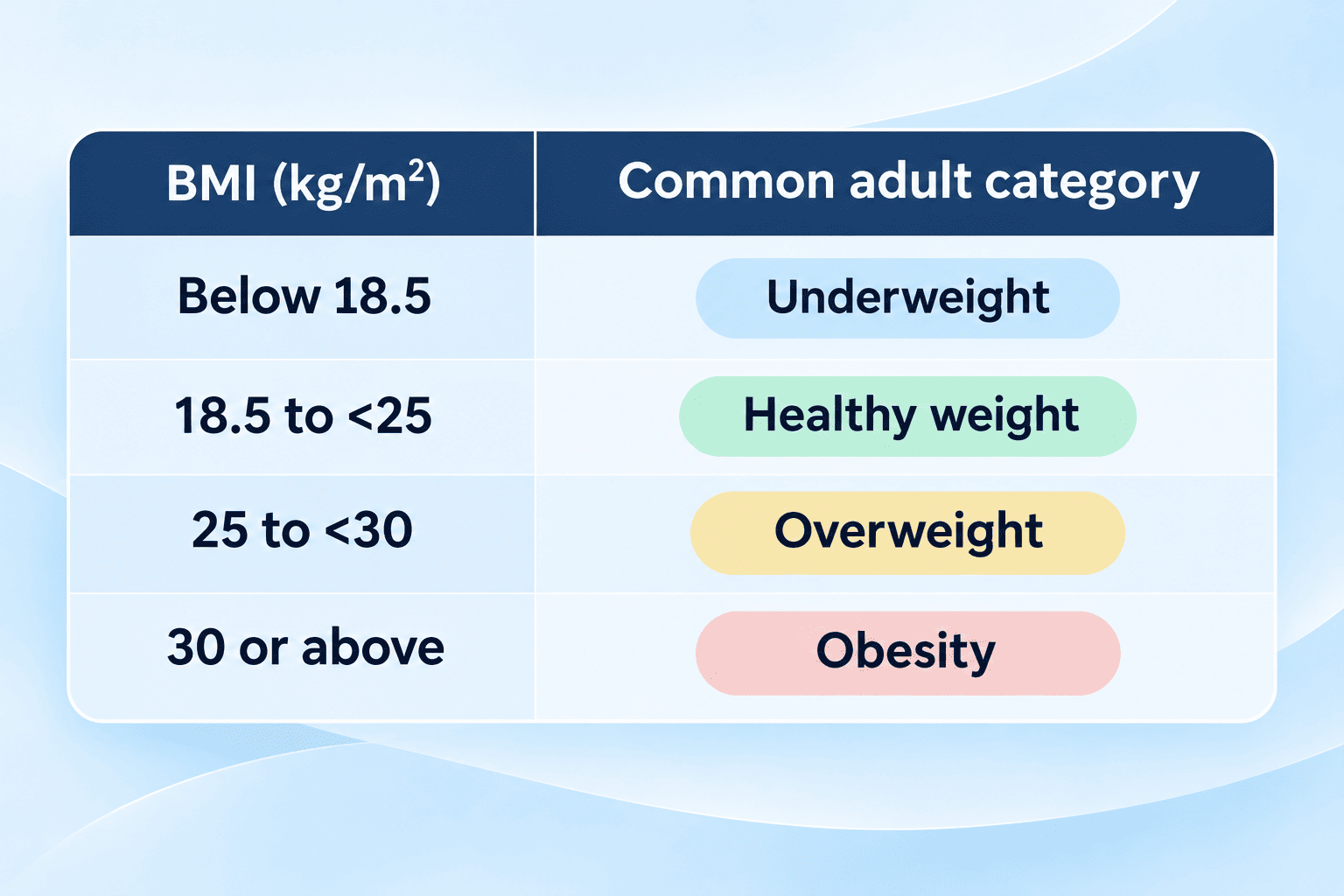
These widely used adult screening categories are not diagnoses. Children and teenagers require age- and sex-specific interpretation. Individual clinical context also matters.
What Is Body Composition Analysis?
Body composition analysis estimates how total body weight is distributed across different tissue compartments. Fat mass includes essential and stored fat, while fat-free mass includes muscle, water, bone, organs, and connective tissue. Lean mass is therefore not the same as skeletal muscle mass.
Body Fat, Muscle Mass, and Fat-Free Mass
Body-fat percentage expresses fat mass as a share of total body weight. Fat mass can also be reported in kilograms or pounds. Skeletal muscle mass refers to a more specific tissue compartment, while fat-free mass includes several tissues and body water. Hydration can influence certain device-based estimates, so reports should be interpreted with attention to the method used.
Body Composition vs. BMI: Key Differences
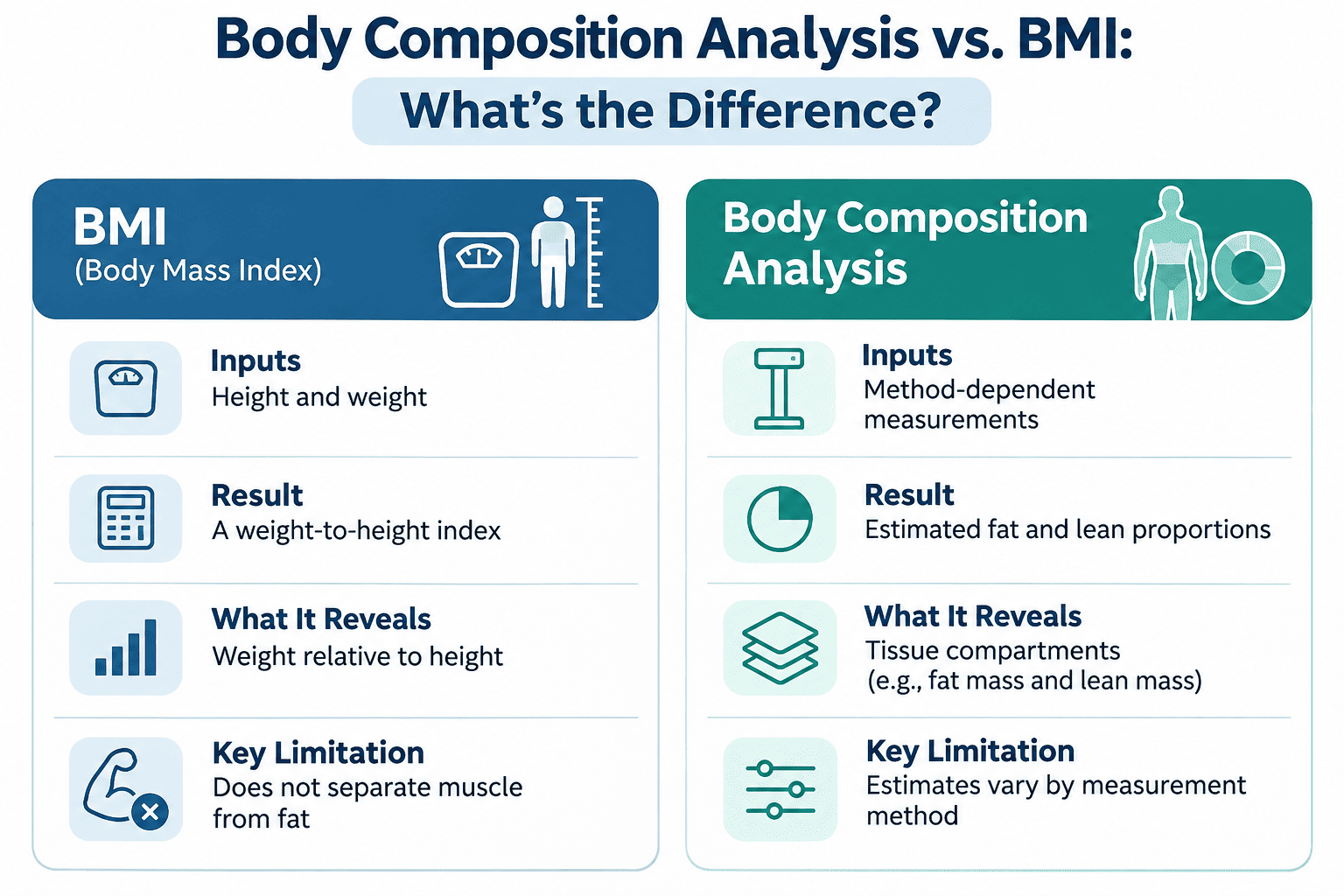
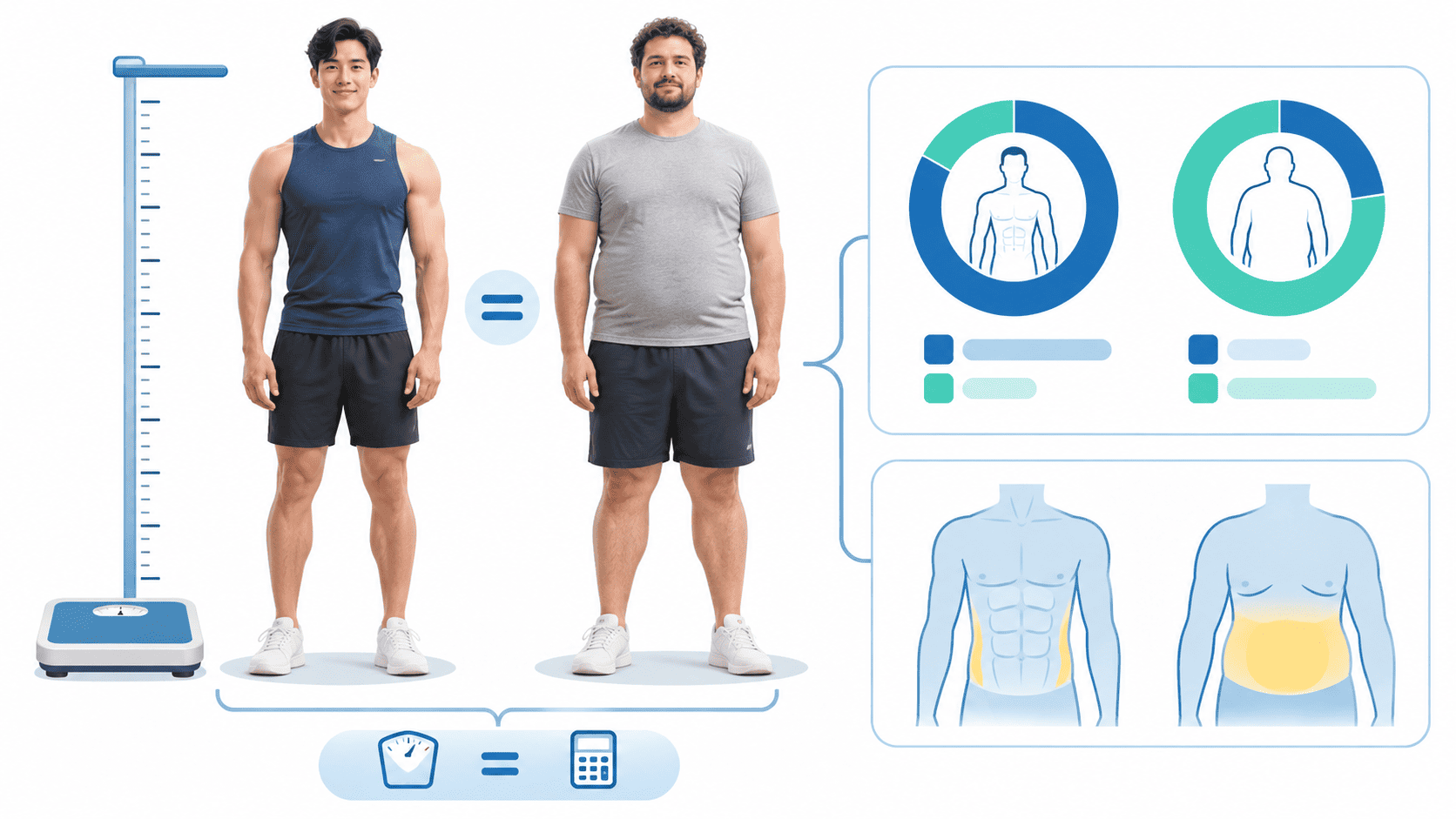
Two people of the same height and weight have the same BMI even when their estimated fat and muscle proportions differ. Body composition analysis can add useful detail for fitness monitoring, but its accuracy and repeatability depend on the technology and testing conditions.
For a deeper understanding of fat mass, muscle mass, and other key measurements, explore our complete guide to body composition.
Why BMI Doesn’t Tell the Whole Story
A muscular athlete and a less muscular adult may share the same BMI despite different body-fat levels. Likewise, a BMI in the standard range does not guarantee a low body-fat percentage. BMI also cannot identify where body fat is stored. Central fat distribution may be relevant to health, but not every body composition device provides a validated regional estimate.
This does not make BMI useless: it remains an accessible screening tool. A more complete interpretation may also consider waist circumference, blood pressure, medical history, and other clinical findings.
How Is Body Composition Measured?
Different assessment methods offer different levels of detail, convenience, cost, and measurement uncertainty. No single method is perfect, and results from different technologies should not automatically be treated as interchangeable.
BIA, DEXA, and Other Methods
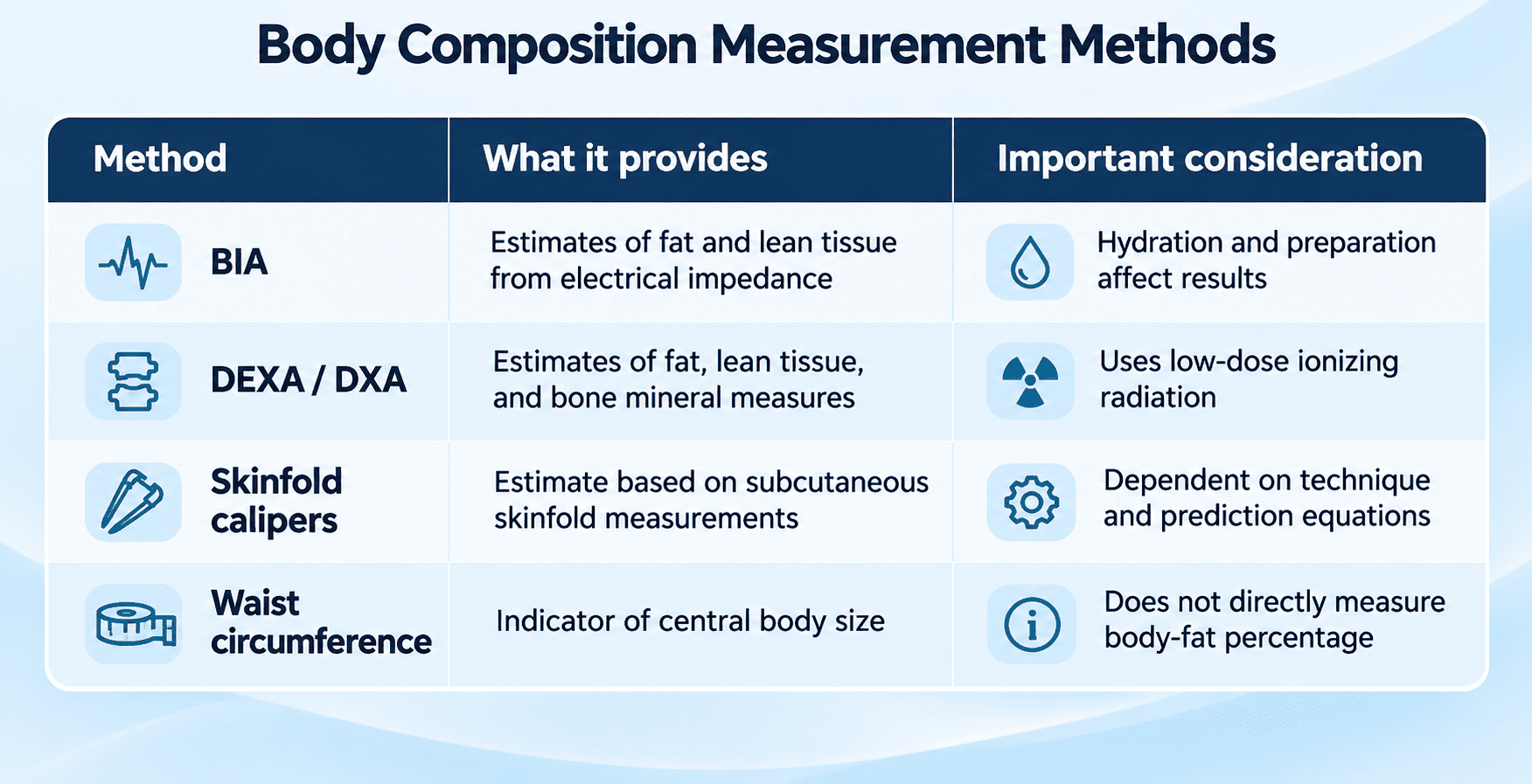
For repeat assessments, select a method that fits the purpose and can be used consistently. Professionals should explain what the instrument estimates rather than implying that every tissue compartment is measured directly.
For gym owners and fitness professionals evaluating assessment equipment, our guide on how to choose a body composition analyzer for your gym explains the key technologies, features, and purchasing considerations.
For fitness and wellness businesses seeking a professional assessment system, the NEXBODY X60 Body Assessment System combines body composition analysis, posture assessment, and neck and shoulder mobility evaluation in one device.
When Should You Use BMI or Body Composition Analysis?
BMI is useful when a quick, standardized height-and-weight screening index is sufficient. Body composition analysis is more informative when the goal is to discuss estimated fat mass, lean mass, or changes associated with a training program. For example, fat loss and muscle gain may occur while body weight remains relatively stable, producing little change in BMI.
Neither approach should be interpreted in isolation. Strength, physical function, waist circumference, and appropriate health assessments can add valuable context.
How to Track Body Composition Changes Accurately
Use the same method and preferably the same device for follow-up assessments. Follow the manufacturer’s preparation guidance and maintain similar testing conditions, particularly around hydration, meals, and recent exercise. Avoid treating small short-term fluctuations as definitive changes in body fat or muscle.
Compare trends over several sessions and consider training performance and other relevant indicators. Record assessment dates and important changes in training or routine to make progress reviews easier to interpret.
How Body Composition Analysis Supports Fitness Professionals
For gyms, personal training studios, and wellness centers, understanding body composition can provide useful information beyond traditional weight and BMI measurements. Professional assessments can help teams monitor estimated fat mass and muscle-related metrics, support structured progress reviews, and communicate results more clearly to clients.
The NEXBODY X60 Body Assessment System combines body composition analysis with posture and flexibility assessments, supporting a broader view of clients’ physical condition. Its reports can help fitness professionals organize assessment conversations and review progress over time. Results should be understood as estimates and not as medical diagnoses.
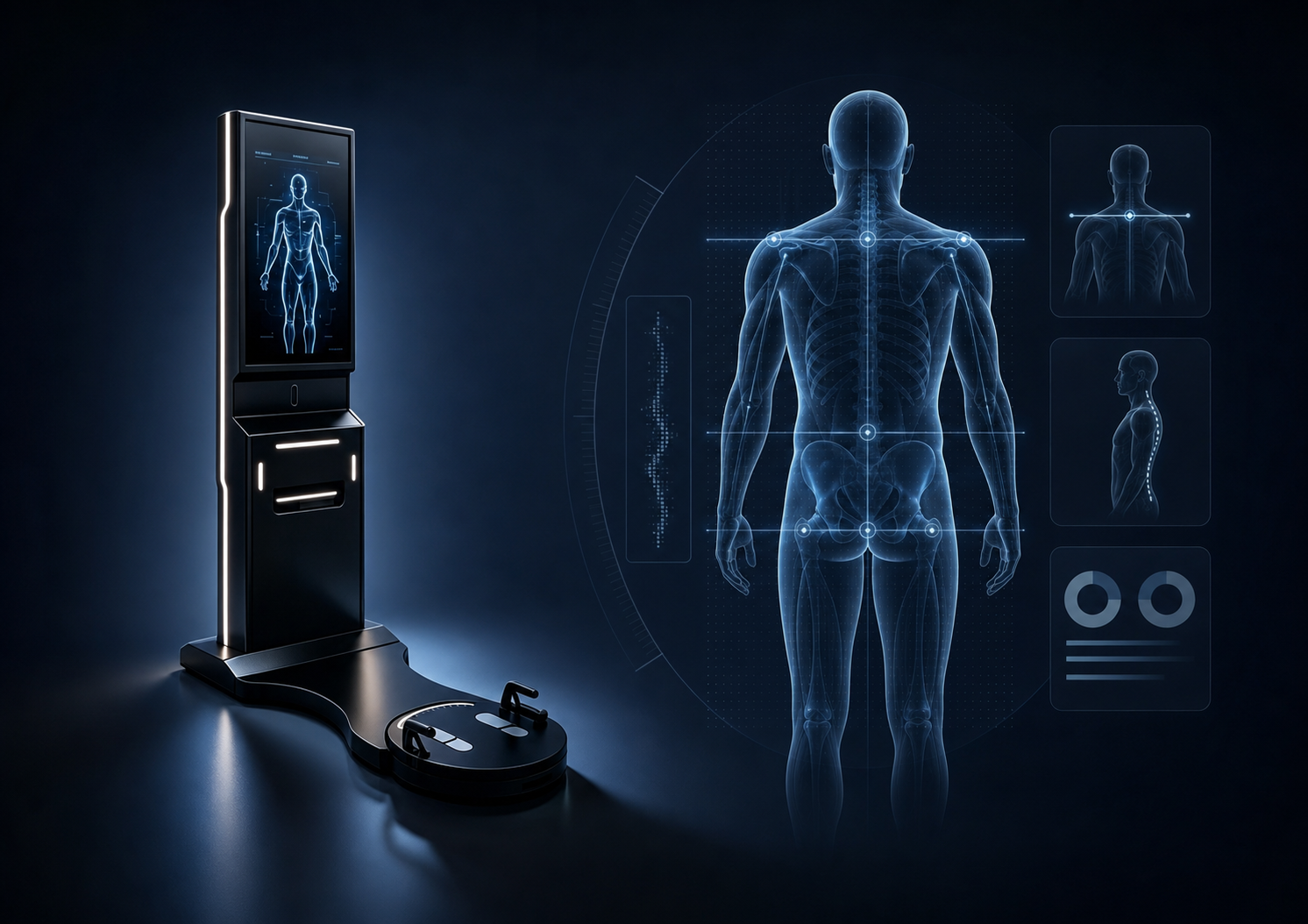
Explore how NEXBODY's professional body assessment systems support fitness centers, personal training studios, and sports performance facilities.
Go Beyond BMI with Professional Body Assessment
Discover how the NEXBODY X60 combines body composition analysis, posture assessment, and neck and shoulder mobility evaluation for fitness and wellness professionals.
Contact us for more infomation.
Frequently Asked Questions
Can a normal BMI hide high body fat?
Yes. BMI does not distinguish fat from muscle, so someone in the normal BMI range may still have a relatively high body-fat percentage.
Can BMI stay the same while body composition changes?
Yes. Fat loss and muscle gain can offset one another on the scale. Tissue estimates may change while BMI remains similar.
Do smart scales measure body fat directly?
Most consumer smart scales use bioelectrical impedance to estimate body composition. Hydration and other testing conditions can influence results.
How often should body composition be measured?
There is no universal schedule. Allow enough time for meaningful change and follow the same testing method under similar conditions.
How can gyms use body composition analysis?
Gyms can use assessments to support client progress reviews, discuss estimated changes in fat and muscle-related metrics, and standardize follow-up conversations.
Should older adults rely on BMI alone?
No. Muscle mass, strength, mobility, and medical context may provide important information alongside BMI.
What is the main difference between BMI and body composition?
BMI is calculated using height and weight, while body composition analysis estimates the proportions of body fat, lean tissue, and other body components. BMI provides a basic screening index, whereas body composition analysis offers more detailed information about physical condition.
Is body composition analysis better than BMI?
Body composition analysis provides more detailed information about estimated fat and lean tissue, making it useful for fitness assessments and individualized training. However, BMI remains a practical screening tool. The appropriate method depends on the purpose of the assessment.
Conclusion
BMI and body composition analysis are complementary rather than competing tools. BMI offers a fast height-and-weight screening index; body composition analysis provides estimates of the tissues behind that weight. The best choice depends on the question being asked, the method available, and the need for consistent progress tracking. For fitness and wellness professionals, a structured assessment process can support more informed conversations with clients.
References and Further Reading
Centers for Disease Control and Prevention (CDC). Body Mass Index (BMI):
World Health Organization (WHO). Obesity and overweight:
https://www.who.int/news-room/fact-sheets/detail/obesity-and-overweight
For clinical interpretation or specific measurement claims, consult method-specific peer-reviewed literature and the device manufacturer’s documentation.