
NEXBODY JOURNAL
Body Composition: What It Means, Why It Matters and How to Measure It
Discover what body composition really means and why it matters beyond body weight. Learn about body fat, muscle mass, and body water, explore common measurement methods, and understand how body composition differs from BMI to support informed fitness, wellness, and health decisions.
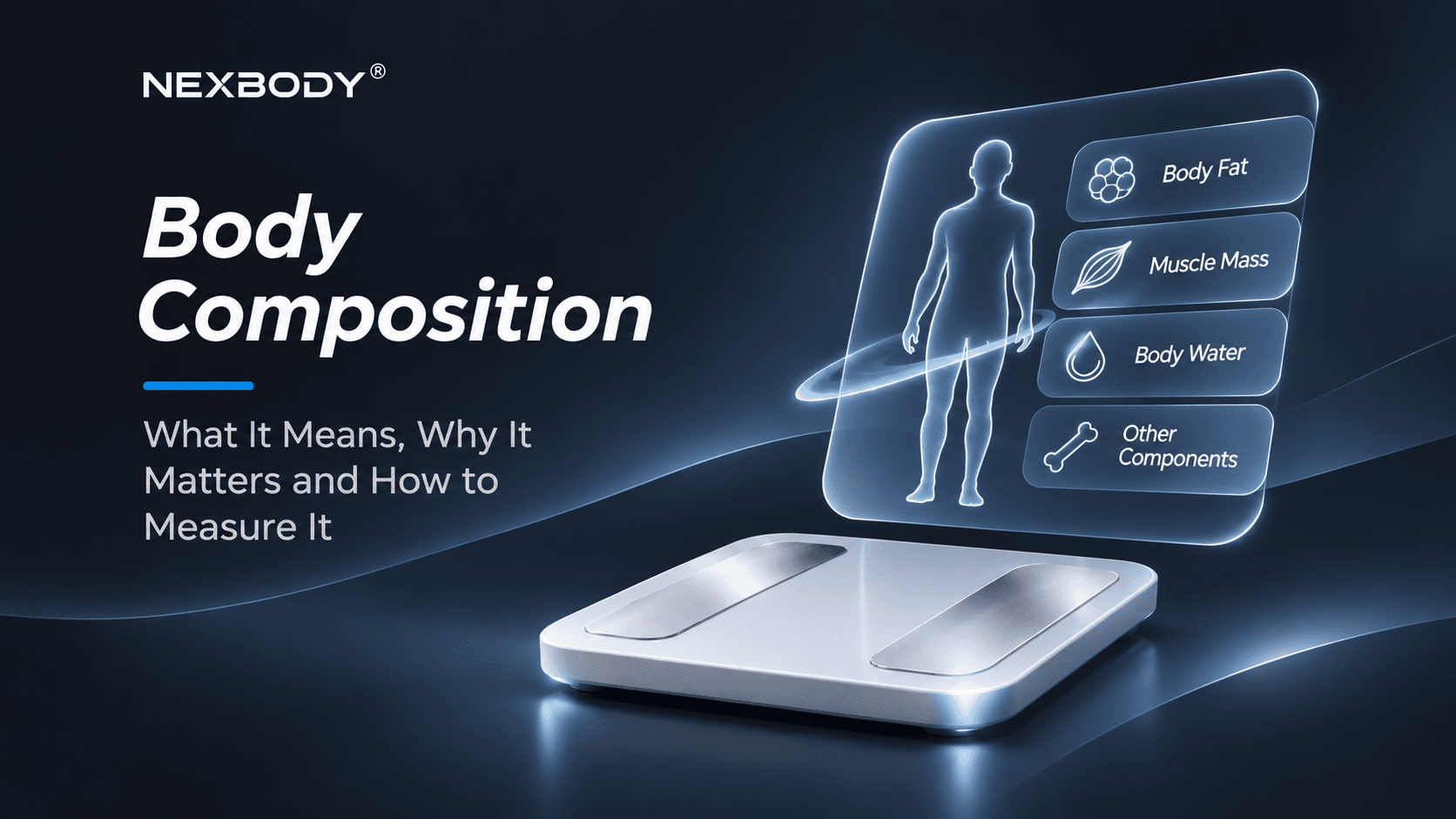
Body composition describes what your weight is made of, offering a more useful picture of health and fitness than a scale reading alone. The same scale number can reflect different amounts of muscle and fat in different people.
Looking beyond the scale can help you make sense of changes in body weight during a fitness routine. It can also give you context for progress that a number alone might miss. This article explains what the measure includes, how common assessments work, and how to use results without treating them as a verdict.
What Does Body Composition Measure?
Body composition separates total weight into fat and fat-free components, including muscle, bone, organs, and water. Body fat percentage is the percentage of total body weight that is fat.
Two people with the same height and body weight can have different amounts of fat and muscle. Body composition includes fat, protein, minerals, and body water, not just the number on a scale. Those parts work together, but they do not all serve the same role.
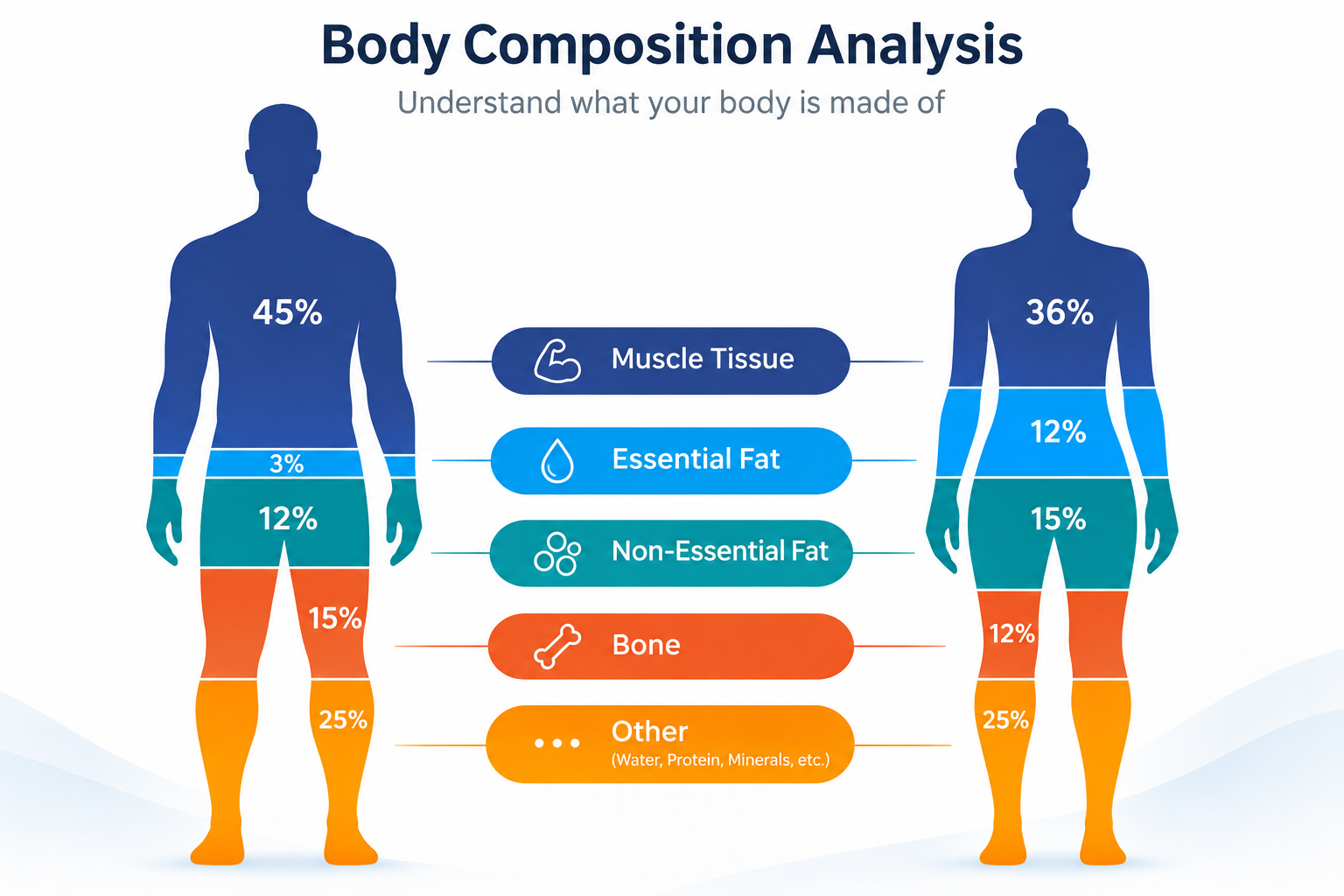
Fat mass and its role
Body fat is essential for normal body function. It stores energy, helps protect organs, supports hormone activity, and contributes to temperature regulation.
However, the amount and distribution of body fat can influence health. Fat stored around internal organs, known as visceral fat, is associated with certain metabolic and cardiovascular risks.
Body fat percentage is therefore useful information, but it should not be interpreted as a complete measure of health.
Lean mass, muscle, bone, and water
Fat-free mass includes everything in the body other than fat, such as muscle, bone, organs, and water.
Muscle mass is an important component because it supports movement, strength, and everyday physical activities. However, muscle mass and fat-free mass are not interchangeable terms.
Body water is another important factor. Normal changes in hydration can influence body composition estimates, particularly when using certain measurement technologies.
Understanding these components helps explain why body weight alone cannot describe changes in muscle and fat.
How Is Body Composition Measured?
A trained professional can estimate body composition with calipers, electrical impedance, imaging, air displacement, or underwater weighing. Each method uses different measurements, so results are most useful when you understand what the test estimates.
No measurement gives a perfect account of every body component. Technique, device type, and the conditions around a test can affect its accuracy and usefulness.
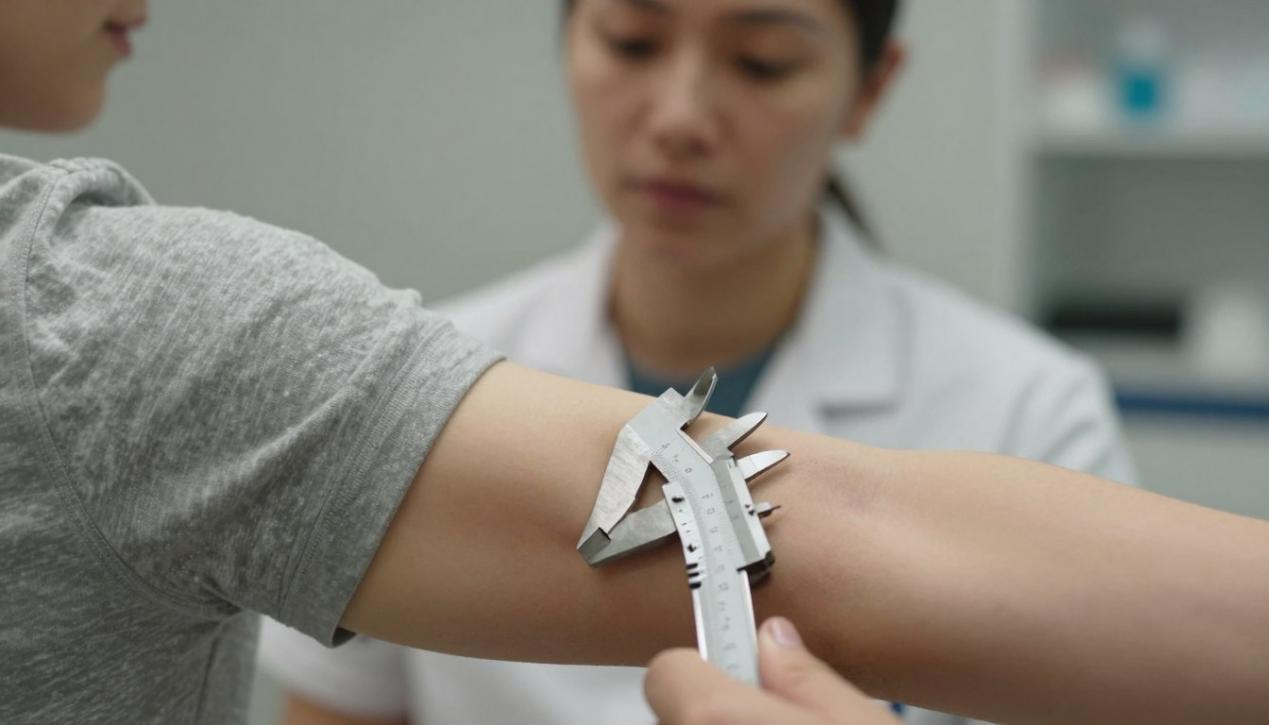
Skinfold calipers and BIA
Skinfold calipers measure the thickness of folds of skin and nearby fat. A common assessment checks five sites: the abdomen, hip, arm, back, and thigh. With good technique, a skinfold estimate can be within plus or minus 3%.
Bioelectrical impedance analysis (BIA) sends a small electrical current through the body and uses the response to estimate body components. Readings typically take less than a minute. Hand-to-foot BIA measures the whole body and is more accurate than hand-to-hand or foot-to-foot devices.
Hydration can affect impedance and shift a BIA result. Keep conditions similar when comparing measurements, including hydration and the timing of each test.
DEXA, air displacement, and underwater weighing
DEXA uses low-level X-rays to estimate fat, lean tissue, and bone. Air displacement estimates body volume from how much air a person displaces in a sealed chamber. Underwater weighing estimates body density by comparing weight on land with weight underwater.
Before choosing a test, check these four practical details:
- Who performs the measurement or explains the result.
- Whether you can repeat the same method later.
- Whether the test fits your comfort and access needs.
- Whether the device has size limits that apply to you.
For progress checks, repeat the same method under similar conditions rather than comparing results from different devices.
How Do Body Composition and BMI Differ?
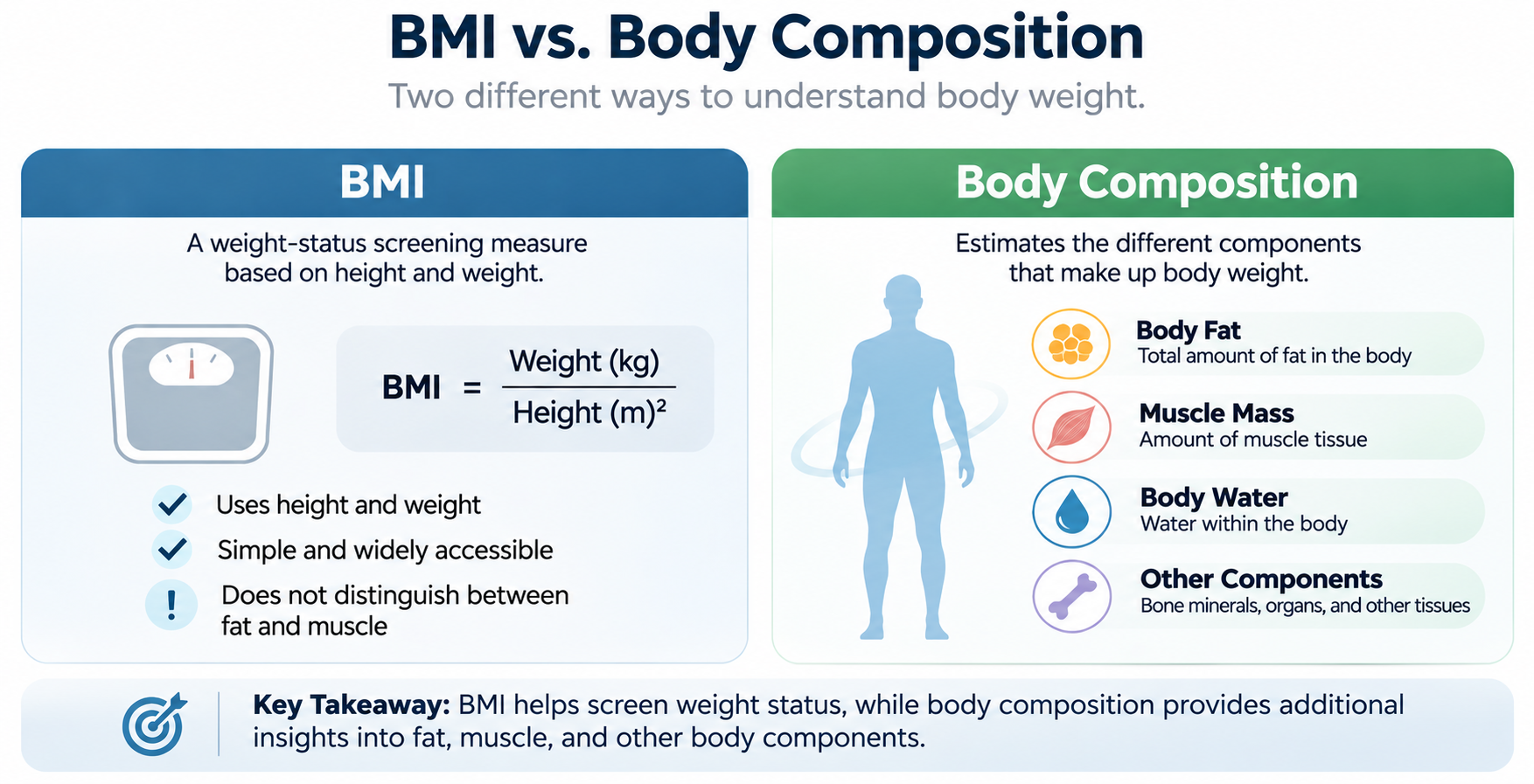
BMI uses height and weight to classify weight status, while body-composition measures estimate what that weight consists of. The key difference is that BMI does not separate fat from muscle.
For adults, BMI equals weight in kilograms divided by height in meters squared. The categories are below 18.5, 18.5-24.9, 25.0-29.9, and 30.0 or above.
Body mass index is a screening measure, not a direct measure of body fat. It can misclassify muscular people because muscle adds weight without showing how much of that weight is fat.
Body fat percentage estimates describe the share of total weight made up of fat. The ranges below vary by age group and sex, but they are estimates, not universal diagnostic cutoffs.
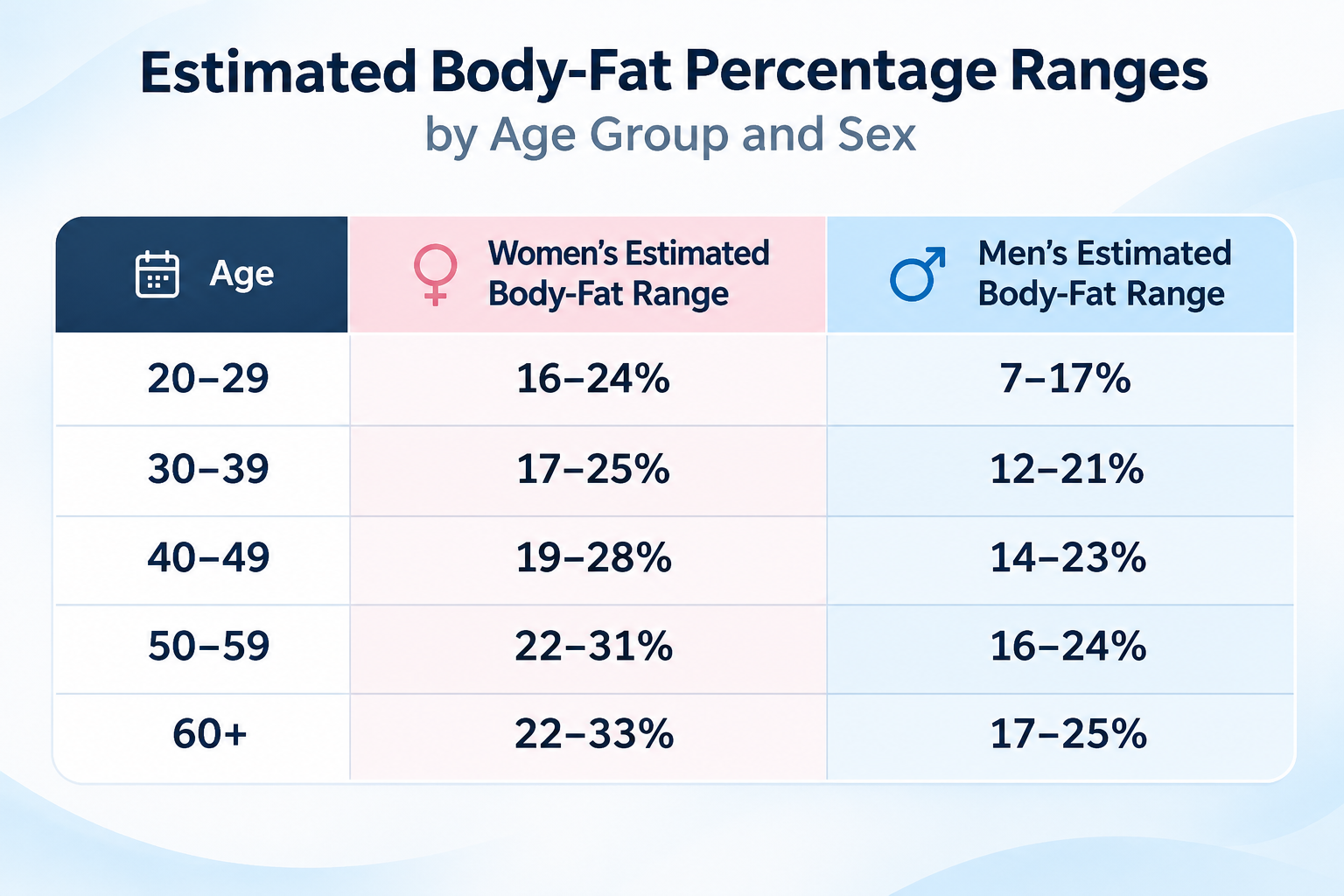
A percentage outside one of these estimated ranges does not, by itself, diagnose a health problem. Testing methods also differ, so a result should be read with its method and limits in mind.
Age and sex can help frame an estimate, but neither tells you a person’s full health picture. A clinician may consider other information alongside BMI or a body fat percentage, such as medical history and how the person feels and functions.
Treat either measure as context for a broader health assessment, not as a stand-alone verdict.
Why Does Body Composition Matter for Health and Fitness?
Body composition matters because both excess fat and too little muscle can affect health and the way everyday movement feels. How much and where fat is stored can add useful context, but no single measurement diagnoses a disease.
Excess body fat is linked with heart disease, diabetes, and some cancers. Visceral fat, stored around the organs, is one type of fat associated with health risks. These links describe risk, not a guarantee about any one person.
Fat distribution and health risks
Fat has ordinary functions, including energy storage and support for body processes. Its location matters because visceral fat around organs differs from fat stored just under the skin.
A body-fat reading cannot show the whole pattern on its own. Health history, daily function, and other clinical information help put a measurement into perspective.
Muscle, movement, and performance
Muscle supports movement and contributes to glucose metabolism. In daily life, muscle strength can make tasks such as carrying groceries or climbing stairs easier, though performance also depends on many other factors.
During exercise, fat serves as an energy source as activity continues beyond 20 minutes. It is a major contributor during endurance events lasting 30 minutes or more.
Very low body fat can also cause problems, including impaired immune function. In female athletes, low estrogen can contribute to bone loss, so lower is not always better.
No particular body type or percentage guarantees health or athletic performance. Focus on health, strength, and function rather than pursuing the lowest possible body-fat number.
How Can You Improve and Track Body Composition?
Sustainable body-composition change usually combines appropriate eating, regular movement, and enough recovery. Progress can involve fat loss, muscle gain, or both, and the scale may not show every change.
Pair balanced meals and adequate protein with regular strength training and cardio. Adults can aim for at least 150 minutes of moderate-intensity cardio or 75 minutes of vigorous-intensity cardio weekly, plus strength training at least two days a week.
Pair nutrition with strength and cardio
Choose meals that support your energy needs and include protein to help maintain or build muscle. Resistance training gives muscles a reason to adapt, while cardio supports fitness and adds regular movement.
Recovery matters, too. A typical sleep target for adults is 7-9 hours per night, and enough rest can help you keep a routine going.
Track trends, not single readings
Use a plan you can follow, then look at measurements alongside changes in strength, energy, and daily function. These four actions can keep the process practical:
-
Set a realistic goal that fits your needs.
-
Combine resistance training with cardio.
-
Support recovery by aiming for enough sleep.
-
Compare repeat measurements made under consistent conditions.
A single reading should never become the goal; choose a measure that helps you make a useful decision.
Scale weight can stay steady while muscle and fat change, so note more than one sign of progress. If a measurement would change a medical or weight-management decision, review it with a healthcare professional.
FAQ
1. What is body composition analysis?
Body composition analysis helps you understand what makes up your body weight, including body fat, muscle mass, body water, and other components. It provides a more detailed picture than body weight alone.
2. Why is body composition more important than weight?
Body weight only shows your total mass. Two people with the same weight may have different amounts of muscle and fat. Body composition analysis provides additional information to help professionals better understand physical condition and changes over time.
3. What is a healthy body fat percentage?
A healthy body fat percentage varies depending on factors such as age and sex. Rather than focusing on a single number, it is important to consider body fat alongside muscle mass, physical activity, and overall health.
4. How often should you measure body composition?
Measurement frequency depends on individual goals. For tracking fitness or wellness progress, regular assessments under consistent conditions can help identify meaningful trends over time.
5. How accurate is body composition analysis?
Accuracy depends on the measurement technology, testing conditions, and individual factors. Different methods estimate body components differently, so results should be interpreted in context rather than treated as exact measurements.
Conclusion
Understanding body composition is about more than tracking weight. By looking at body fat, muscle mass, and other key measurements, individuals and professionals can gain a clearer picture of physical condition and make more informed decisions.
For fitness centers, wellness facilities, and healthcare professionals, reliable body assessment tools can turn these insights into practical value.
Ready to take body assessment to the next level?
Discover how the NEXBODY X60 Body Assessment System combines body composition analysis, posture evaluation, and shoulder mobility assessment to support professional assessment workflows.
Explore NEXBODY X60 | Get Product Details